//Aria® Fabric Blinds
Aria Fabric Blinds for Marin County Homes
Hunter Douglas Aria® combines soft translucent fabric vanes with the clean lines of a horizontal blind - dual-opacity light control and an innovative tilt bar, measured and installed across Marin County.
//A New Category
First-of-their-kind fabric horizontal blinds
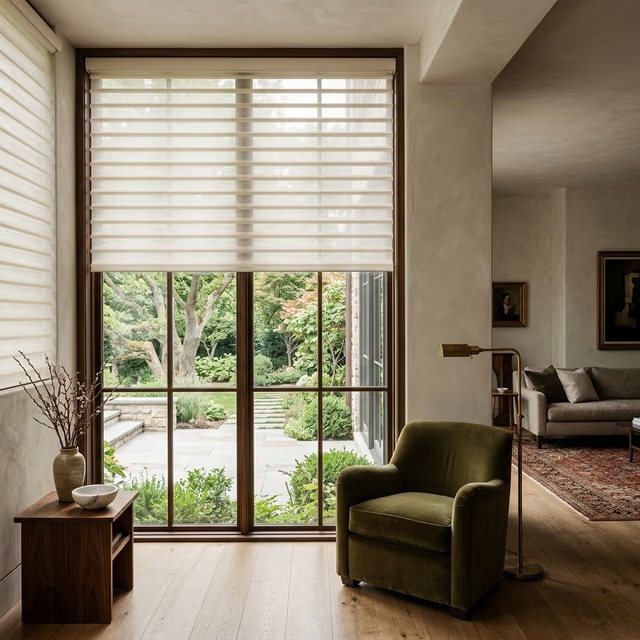
Aria fabric blinds are the first horizontal blinds made with lightweight translucent fabric vanes instead of hard slats. They combine the clean lines of a blind with the softness of a shade, creating a new category of window covering from Hunter Douglas.
Traditional horizontal blinds use rigid slats in wood, aluminum, or vinyl. Aria replaces those hard materials with a soft, translucent fabric that filters light gently when tilted open and overlaps to darken the room when tilted closed. The neutral color palette and luxurious textures complement modern and transitional interiors across Mill Valley, San Rafael, and the greater Marin County area. For homeowners who love the organized horizontal lines of traditional blinds but want a softer, more refined look, Aria is the answer.
//Light & Privacy
Dual-opacity light control in one product
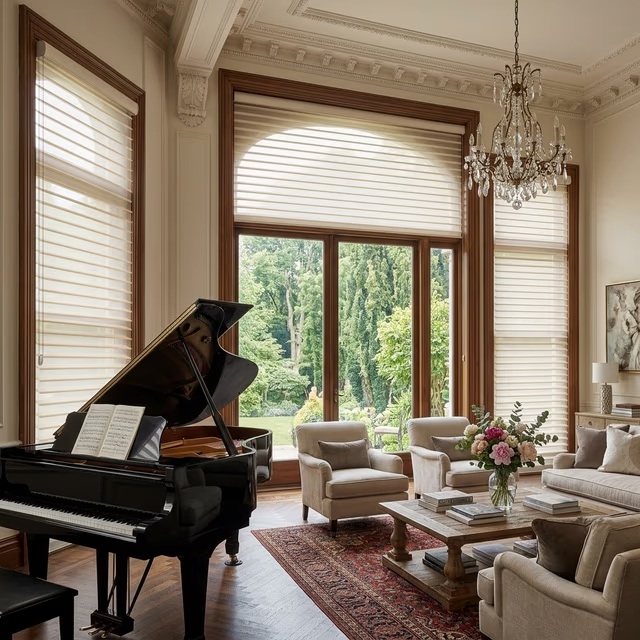
One of Aria’s most practical innovations is dual-opacity light control built into a single product. Tilt the fabric vanes downward and natural light passes through the translucent material for a soft, diffused glow that reduces glare while keeping a connection to the outdoors. Tilt the vanes upward and the overlapping fabric layers create a room-darkening effect that blocks most incoming light - no separate room-darkening shade required.
This eliminates the cost and visual clutter of layering a blackout treatment behind your blinds, a common approach with traditional hard-slat products. Whether you need complete darkness in a bedroom or filtered afternoon light without screen glare, Aria delivers both from one elegant product. Pair Aria with PowerView automation to schedule light transitions throughout the day automatically.
//Aria vs. Traditional
Blind structure, shade softness
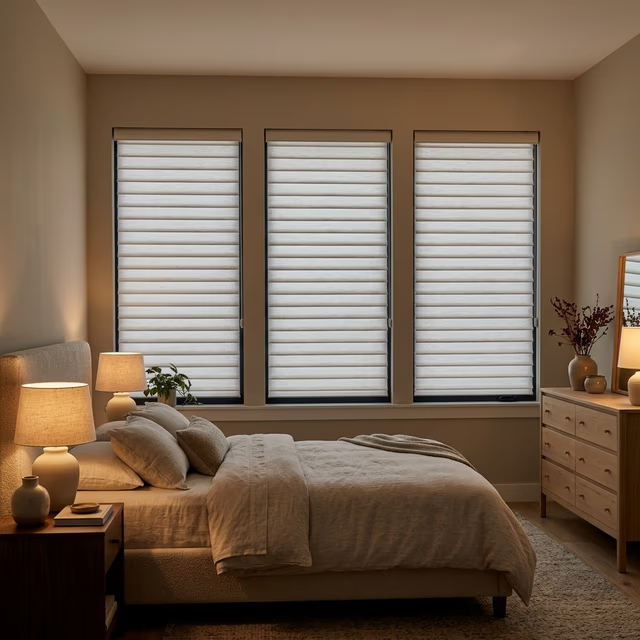
Traditional horizontal blinds provide excellent light control and a clean, structured look, but the rigid slats can feel stark in rooms where warmth and softness are desired. Aria maintains the clean horizontal aesthetic of a blind while adding the tactile warmth and light-filtering properties of a shade - the best choice for living rooms, dining rooms, and bedrooms where the window treatment contributes to the room’s design.
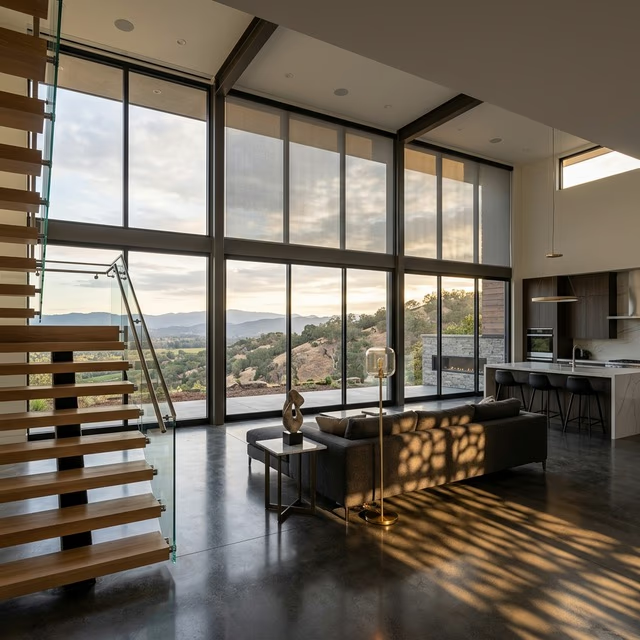
Unlike Silhouette window shadings, which suspend fabric vanes between sheer facings, Aria keeps the distinct horizontal blind form with visible individual vanes. Aria sits between traditional Parkland and EverWood blinds and soft shading products, giving you a category that did not exist before. Aria is also engineered for extra-large window openings that would be impractical with heavier hard-slat blinds - a natural fit for the oversized windows in modern Marin County construction.
//Operation & Automation
Innovative tilt bar, or fully motorized
The Aria tilt bar eliminates the traditional twist-and-lift motion of conventional horizontal blinds. Instead of gripping and rotating a wand or pulling a cord, you simply move the tilt bar to angle the vanes - faster, smoother, and more intuitive, especially on larger windows where traditional mechanisms feel stiff. LiteRise cordless operation and Easytilt wand control are also available.
For hands-free control, Aria is compatible with Hunter Douglas PowerView motorization - app, voice through Alexa, Google Assistant, or Apple HomeKit, and automated daily schedules. All operating options meet the ANSI/WCMA A100.1-2022 child-safety standard, and Bay Blinds installs Aria throughout Marin County.
//Related Products & Solutions
//Frequently Asked Questions
How do Aria fabric blinds control light differently from traditional blinds?
Aria blinds use dual-opacity light control through translucent fabric vanes. When you tilt the vanes downward, soft ambient light filters through the fabric for a gentle dimming effect. When you tilt the vanes upward, the overlapping fabric layers create a room-darkening effect without needing a separate blackout shade. This two-in-one capability eliminates the cost and complexity of layering a room-darkening treatment behind your blinds, which is a common requirement with traditional hard-slat blinds.
Can Aria blinds fit extra-large windows?
Yes. Aria fabric blinds are specifically designed to accommodate extra-large window openings that would be impractical for traditional wood or aluminum blinds. The lightweight translucent fabric keeps the overall product weight manageable even at wider and taller sizes, which prevents the sagging and bowing that can occur with heavy hard-slat blinds on oversized windows. During your consultation, our design team will measure your windows and confirm that Aria is the right fit for your specific dimensions.
What is the innovative tilt bar on Aria blinds?
The Aria tilt bar is a redesigned operating mechanism that eliminates the traditional twist-and-lift motion required by conventional horizontal blinds. Instead of gripping and rotating a wand or pulling a cord, you simply move the tilt bar to angle the fabric vanes to your preferred position. This makes daily adjustment faster, smoother, and more intuitive - especially on larger windows where traditional tilt mechanisms can feel stiff or cumbersome. PowerView motorization is also available for hands-free control.
Are Aria fabric blinds available with motorization in Marin County?
Yes. Aria blinds are compatible with Hunter Douglas PowerView motorization, which allows you to control the vanes by app, voice command through Alexa, Google Assistant, or Apple HomeKit, and automated daily schedules. LiteRise cordless operation and Easytilt wand control are also available for homeowners who prefer a manual system. All operating options meet ANSI/WCMA A100.1-2022 child safety standards. Visit our smart home automation page for full details on PowerView integration.
See Aria fabric blinds in your home
Free in-home & on-site consultations across Marin County and Petaluma.