//Code Compliance
Title 24 2026 Compliant Window Treatments for Marin County
California’s 2026 Title 24 energy code requires window assemblies to reach a U-factor of 0.27 or lower in Climate Zone 2. NFRC-rated Hunter Douglas treatments count toward compliance - measured, specified, and documented across Marin County.
//Energy Code
What Title 24 2026 Requires in Marin County
Title 24 is California’s Building Energy Efficiency Standards, enforced by the California Energy Commission. The 2026 cycle - effective January 1, 2026 - requires window assemblies in Climate Zone 2, which covers Marin County, to achieve a U-factor of 0.27 or lower. The U-factor measures heat transfer through the entire window assembly (frame, glass, and any attached covering); a lower number indicates better insulation. This is the most significant tightening of fenestration requirements in over a decade, and standard dual-pane Low-E glass - with a U-factor around 0.30 - no longer meets code on its own. Bare dual-pane glass sits at U-factor 0.47 and fails outright without a window treatment.
NFRC-rated window treatments bridge the gap. Because the California Energy Commission recognizes them as part of the fenestration assembly, adding a rated shade improves the combined U-factor without full window replacement. Triple-cell Duette Architella shades contribute R-7.86 of thermal resistance, yielding a shade-only U-factor of 0.127; paired with dual-pane Low-E glass, the combined assembly reaches a U-factor of 0.23 - exceeding the 2026 threshold with margin to spare. That makes cellular honeycomb shades the single most effective product for Title 24 compliance, especially in retrofit scenarios, and a cornerstone of any whole-home energy-efficiency strategy.
//Compliance Data
U-Factor and SHGC Performance by Product
Two metrics govern compliance. U-factor measures insulation, and the 2026 Climate Zone 2 threshold is 0.27 or lower. SHGC (Solar Heat Gain Coefficient) measures how much solar radiation passes through the glass as heat; lower is better. All Hunter Douglas values below are NFRC-rated and reflect combined assembly performance with dual-pane Low-E glass unless noted as shade-only. Triple-cell Duette Architella reaches R-7.86 (shade-only U-factor 0.127) for a combined 0.23. Double-cell Architella delivers R-5.0 for a combined U-factor of 0.20, and single-cell Duette contributes R-3.5 for a combined 0.25 - both pass the 2026 threshold on dual-pane Low-E. Silhouette with LightLock is edge-sealed to SHGC 0.19, while solar shades at 1% openness achieve SHGC 0.12 - the best solar-heat performance for west-facing glass.
Orientation sets the SHGC target: west-facing windows require the strictest value, 0.17 or lower, for afternoon sun; south-facing windows target 0.22 or lower for midday exposure. Not every product clears code alone - wood plantation shutters land at a combined U-factor of 0.28, near the threshold and often requiring a Low-E glass pairing. Actual performance varies by glass type, frame material, and installation method, so Bay Blinds runs project-specific compliance calculations for every window before specifying a product. Explore the full Hunter Douglas collection during your assessment.
//Climate Zone 2
Marin County Climate Zone 2 Requirements
Marin County falls within California Climate Zone 2, which spans the inland valleys of the North Bay including San Rafael, Novato, Mill Valley, and the Richardson Bay Valley corridors. Climate Zone 2 experiences wide temperature swings - summer highs exceeding 100°F in the Alexander Valley and Lucas Valley corridors, with winter lows reaching the low 30s. This thermal range drives Title 24 requirements that are more demanding than coastal zones, emphasizing both insulation (U-factor) and solar heat gain control (SHGC).
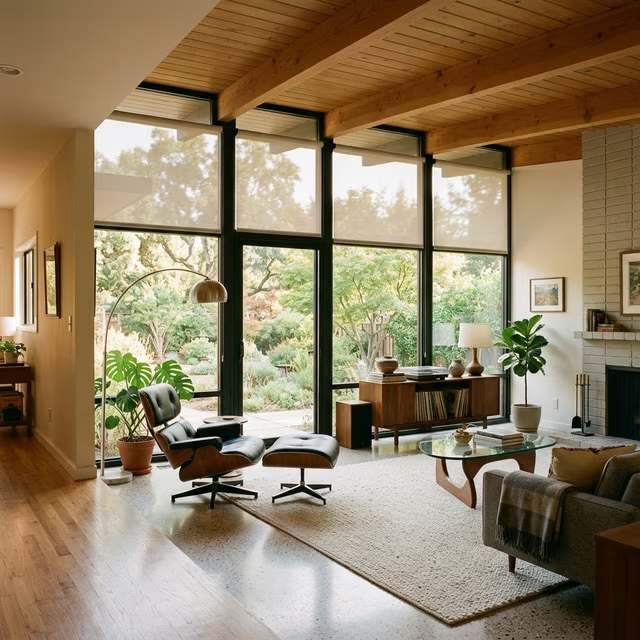
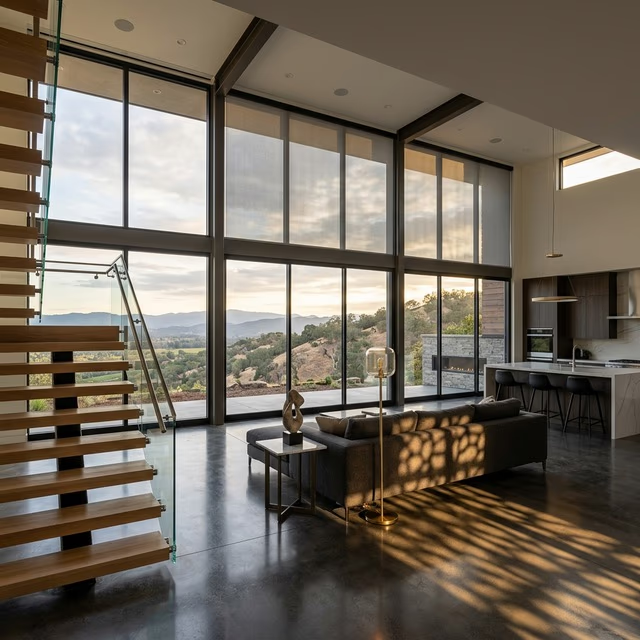
West-facing windows require the strictest SHGC performance - 0.17 or lower - to manage intense afternoon sun during Marin’s long summer days, while south-facing windows target 0.22 or lower. Solar shades with 1% openness reach SHGC values as low as 0.12, the top performer for west-facing compliance. Homes in Mill Valley with large west-facing glass walls face the most demanding scenario: achieving U-factor 0.27 and SHGC 0.17 simultaneously. The solution typically pairs a solar shade for SHGC control with a cellular shade for U-factor insulation - a dual-layer approach at one window. For architectural glass walls, recessed headrail systems with motorized dual-shade brackets maintain clean sightlines while delivering full compliance across the Marin County service area.
//Compliance Paths
New Construction vs. Retrofit Compliance
New homes in Marin County meet Title 24 2026 through either the prescriptive path (specific U-factor and SHGC thresholds for each window) or the performance path (overall building energy performance modeled in software like CBECC-Res). In both, NFRC-rated window treatments can be included in the fenestration assembly calculation - specifying Duette Architella shades during design gives architects flexibility in glass selection, since an affordable dual-pane window paired with a compliant shade can outperform expensive triple-pane glass alone.
For existing homes undergoing permitted renovations - window replacements, room additions, or major remodels - compliance is triggered for the affected areas, and the retrofit path is where window treatments provide the greatest value. Rather than replacing windows with costly triple-pane units, adding NFRC-rated cellular shades to existing dual-pane glass achieves compliance at a fraction of the cost, particularly for older homes in San Rafael and Novato where window replacement would involve significant structural modification. Even where compliance is not legally required, meeting or exceeding the 2026 standard raises resale value, may qualify for utility rebates, and cuts energy costs by 15–25% through improved thermal performance. With PowerView automation, shades run on schedules that maximize savings without manual adjustment.
//Active Envelope
Active Building Envelopes and Automated Demand Response
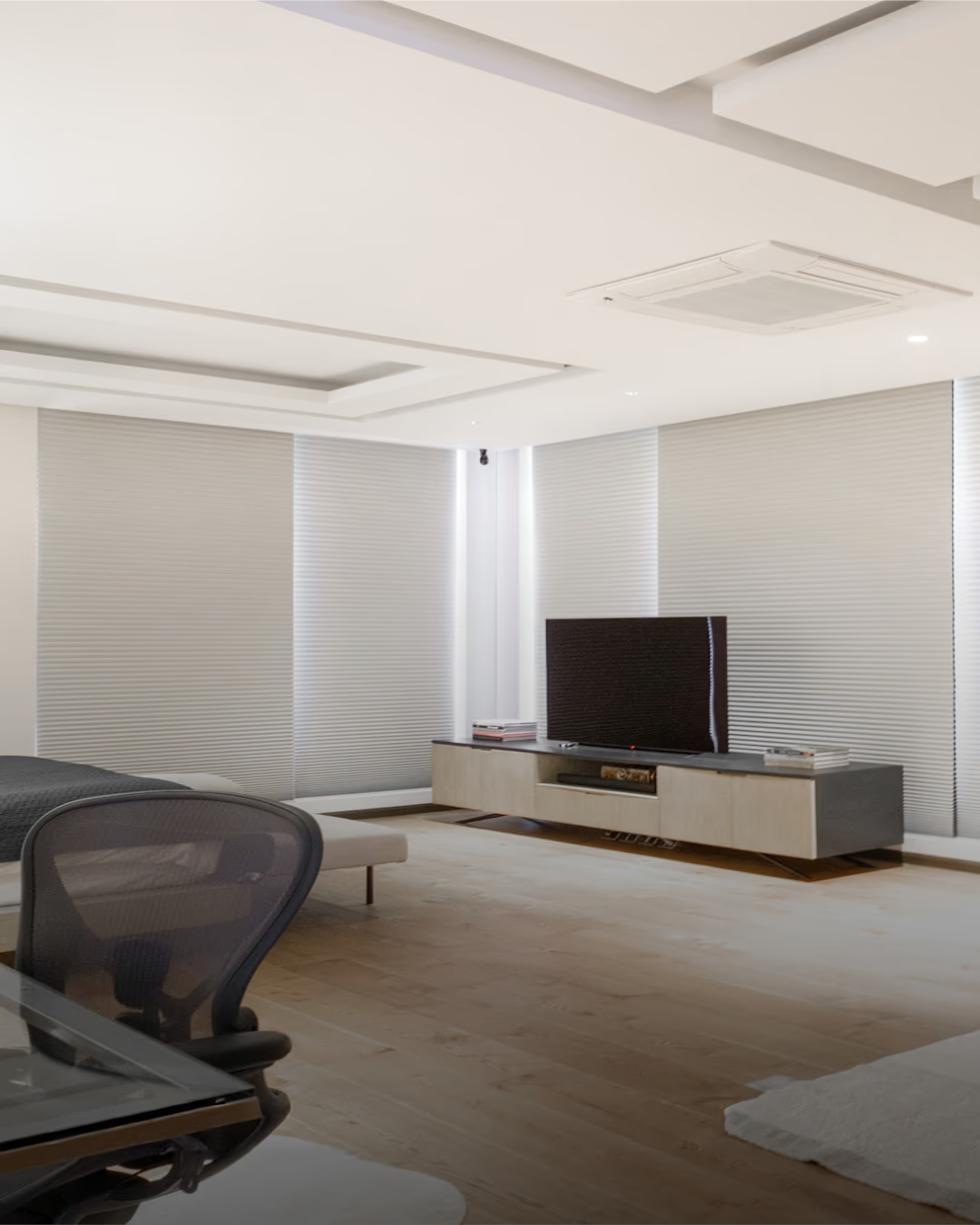
The 2026 Title 24 update introduces “Active Building Envelope” provisions for luxury residences with high glazing ratios, recognizing motorized window treatments as active thermal management components - not passive decorative elements. Homes that deploy motorized shading systems capable of responding to real-time conditions qualify for enhanced compliance credits under the performance path. Automated Demand Response (ADR) protocols under OpenADR 2.0b let utility providers signal participating buildings during peak demand events; motorized treatments connected to RadioRA 3 or Savant platforms respond by automatically deploying solar shades on sun-exposed glass, cutting cooling load without homeowner intervention.
Residences equipped with OpenADR 2.0b VEN (Virtual End Node) certified automation - including compliant motorized shading - may qualify for demand response incentive programs from PG&E and Sonoma Clean Power. Non-compliance with active envelope provisions can result in penalties of up to $2,000 per day for permitted luxury construction projects with glazing ratios exceeding 40 percent. Smart home automation systems that integrate motorized shades with whole-home energy management satisfy both the active envelope and ADR requirements simultaneously. Bay Blinds provides complete NFRC certification documentation - U-factor, SHGC, combined assembly calculations, and product certification numbers - for every qualifying installation, coordinating directly with your architect, general contractor, or energy consultant.
Authoritative references: California Energy Commission (authors Title 24 Part 6), CEC 2025/2026 Energy Code (effective January 1, 2026), NFRC (certifies U-factor, SHGC, VT), CalGreen (Title 24 Part 11), U.S. Dept. of Energy - Window Attachments, Berkeley Lab Windows and Daylighting Group, ENERGY STAR windows and attachments, ANSI/WCMA A100.1-2022 (cordless safety), and EPA indoor air quality.
//Related Products & Solutions
//Frequently Asked Questions
What is Title 24 and when does the 2026 update take effect?
Title 24 is the California Building Energy Efficiency Standards, administered by the California Energy Commission. The 2026 update takes effect January 1, 2026 and requires window assemblies to achieve a U-factor of 0.27 or lower in Climate Zone 2, which covers Marin County. This represents a significant tightening from the previous cycle and affects both new construction and major retrofit projects that trigger permit requirements. Window treatments with NFRC ratings can be included in the overall window assembly calculation, making them a practical compliance pathway for homeowners and builders.
Can window treatments help my Marin County home meet Title 24 2026 requirements?
Yes. NFRC-rated window treatments are recognized by the California Energy Commission as part of the fenestration assembly for Title 24 compliance calculations. When a window treatment is paired with the existing glass, the combined U-factor of the assembly improves significantly. For example, standard dual-pane Low-E glass has a U-factor around 0.30, which fails the 2026 threshold of 0.27. Adding Duette Architella triple-cell shades brings the combined assembly U-factor down to approximately 0.23, well within compliance. Bay Blinds provides documentation for Title 24 submissions on every qualifying installation.
What is the difference between U-factor and SHGC for Title 24?
U-factor measures heat transfer through the window assembly. A lower U-factor means better insulation. The 2026 Title 24 threshold for Climate Zone 2 is U-factor 0.27 or lower. SHGC (Solar Heat Gain Coefficient) measures how much solar radiation passes through the glass and enters the home as heat. Lower SHGC values mean less solar heat gain. For west-facing windows in Marin County, a target SHGC of 0.17 or lower is recommended to control afternoon heat, while south-facing windows target 0.22 or lower. Both metrics matter for compliance, and different window treatment products excel at each.
Does Title 24 apply to my existing home or only new construction?
Title 24 applies to new construction, additions, and alterations that trigger a building permit. If you are replacing more than a certain percentage of your windows, adding a room, or performing a major renovation, Title 24 compliance is required. For existing homes not undergoing permitted work, Title 24 is not mandatory, but upgrading to compliant window treatments still delivers meaningful energy savings and increases property value. The retrofit compliance pathway allows NFRC-rated window treatments to count toward the assembly U-factor, making it possible to bring older windows into compliance without replacing the glass.
What NFRC documentation does Bay Blinds provide for Title 24 submissions?
Bay Blinds provides complete NFRC certification documentation for every qualifying Hunter Douglas product installation. This includes the NFRC-rated U-factor and SHGC values for the window treatment, the combined assembly performance calculation when paired with your existing or specified glass, and the product certification number for inclusion in your Title 24 compliance filing. Our design team coordinates directly with your architect, general contractor, or energy consultant to ensure all documentation meets California Energy Commission submission requirements.
Meet Title 24 2026 with confidence
Free Title 24 compliance assessment: we evaluate every window, calculate combined U-factor and SHGC, and provide full NFRC documentation for permit submissions across Marin County.