//Hartmann and Forbes
Hartmann and Forbes Natural Fiber Shades for Marin County
Hand-tied jute, bamboo, sea grass, and abaca shades woven to order at a Portland workshop - designed, measured, and installed for luxury estates across Marin County and Petaluma.
//The Artisan Collection
Hand-Tied Natural Fiber Shades for Marin Luxury Estates
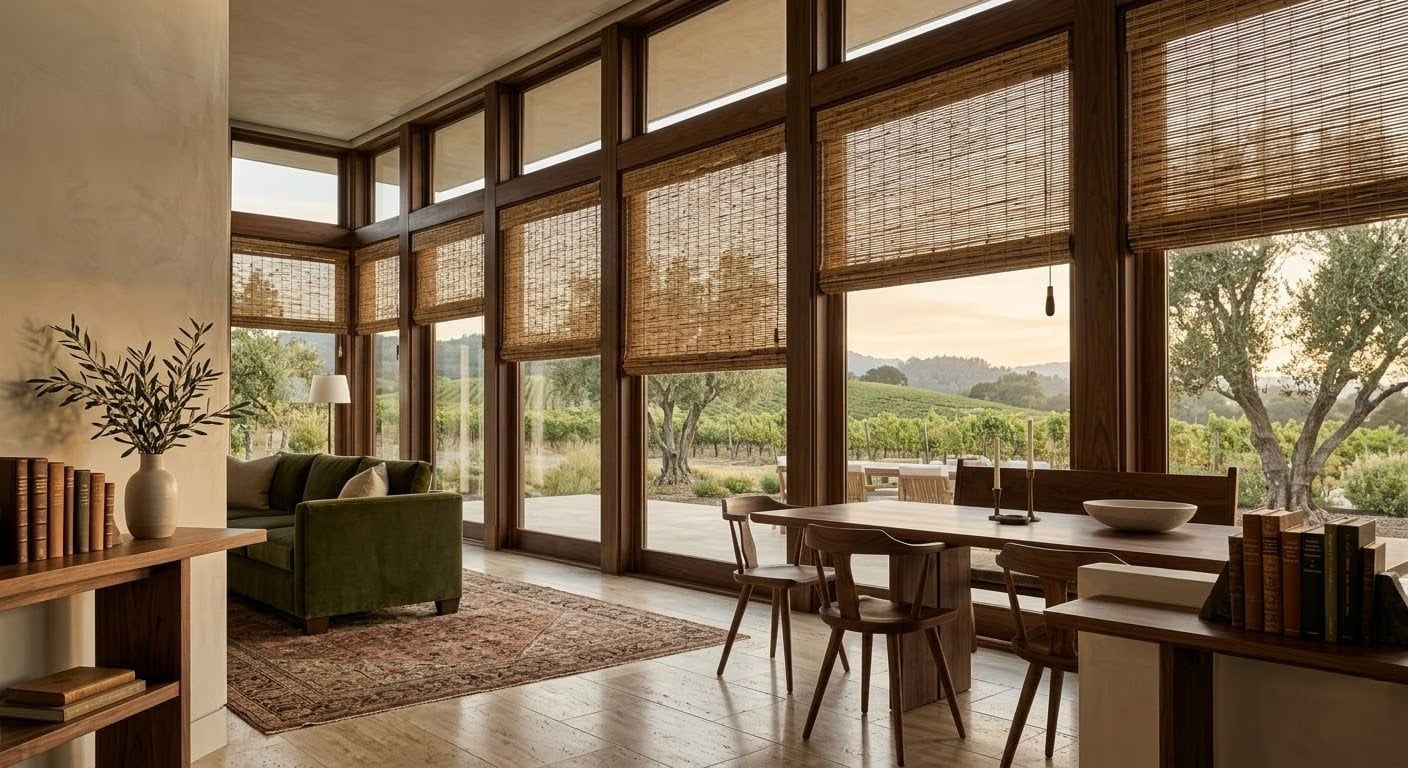
Hartmann and Forbes crafts hand-tied natural fiber shades from sustainable materials including jute, bamboo, sea grass, and abaca. Each shade is woven to order at their Portland, Oregon workshop using artisanal techniques that mass-market manufacturers cannot replicate. With over 500 hand-woven patterns, it is the largest collection of artisan natural fiber window treatments from any single manufacturer. Bay Blinds is an authorized Hartmann and Forbes dealer serving Mill Valley, the Lucas Valley, and all of Marin County with free in-home and on-site consultations.
When architects at firms like Olson Kundig specify window treatments for high-end residential projects, they look beyond catalog options. They need materials with genuine character, finishes that respond to natural light in beautiful ways, and a fabrication process that accommodates non-standard dimensions and custom detailing. Hartmann and Forbes shades appear in architect-designed estates throughout the North Bay because the weaves are tight and consistent where they need to be, the edge binding is hand-finished, and the natural fiber textures introduce warmth without competing with the architecture. Bay Blinds partners directly with design professionals on new construction and whole-home renovation projects, and for machine-woven alternatives you can compare the Hunter Douglas collection during your consultation.
//Natural Materials
Jute, Bamboo, Sea Grass, and Abaca
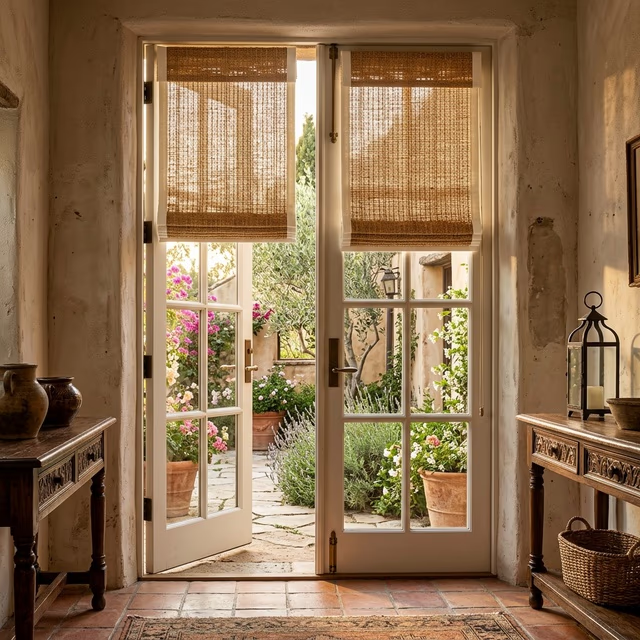
Each material in the Hartmann and Forbes collection brings a distinct texture, color range, and light-filtering quality to a room. Jute is the most versatile fiber, offering a soft, woven textile feel with warm golden-to-brown tones, and weaves range from tight, semi-opaque panels to open weaves that let dappled sunlight pass through. Bamboo delivers a clean, linear grain with subtle natural variation, lighter in color than jute and effective where a bright, airy feel is desired. Bamboo shades pair well with the custom drapery layering approach many designers favor for hillside estates.
Sea grass is harvested from coastal wetlands and woven into dense, durable panels with a distinctly organic texture; it resists moisture better than most natural fibers, making it practical for kitchens, covered outdoor living areas, and bathrooms. Abaca, derived from a banana-plant species native to the Philippines, is the strongest natural fiber in the collection, and its silky sheen and refined drape make it the premium choice for formal living and dining spaces in $5M-plus estates. All four materials are sustainably harvested, and for a woven-wood look with a different profile you can also explore Silhouette window shadings or artisan Conrad original shades.
//Custom Craftsmanship
Custom Weave Patterns and 100+ Edge Bindings
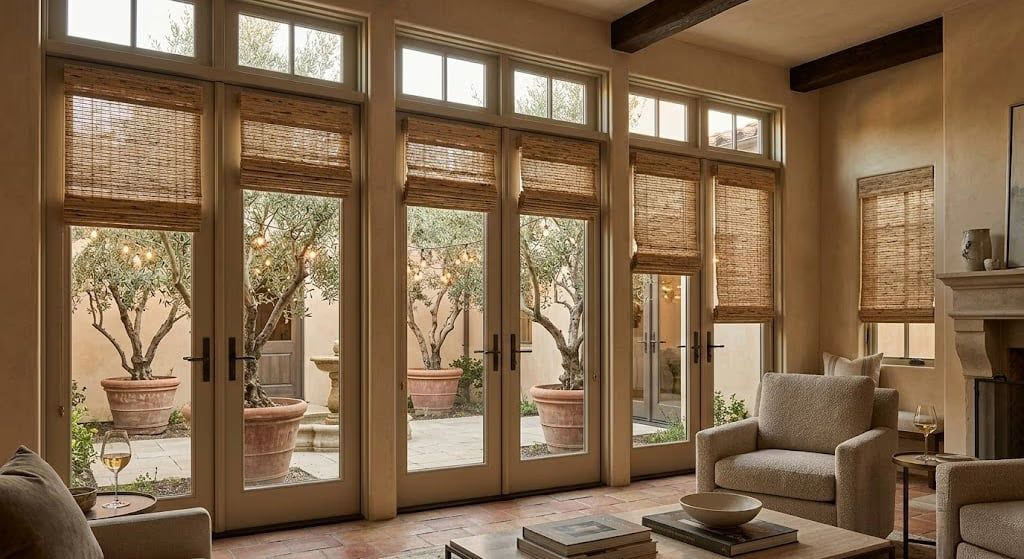
Where mass-market woven wood shades offer a fixed set of patterns, Hartmann and Forbes builds every shade to your specification. Open weave patterns allow the most light to pass through, creating a soft, filtered glow that reveals the texture of each individual fiber. Semi-open weaves balance privacy with light control and work well in living areas that face neighboring properties. Tight weaves provide the highest level of privacy and light blocking among natural fiber options and can be paired with a blackout liner for bedrooms and media rooms.
Edge binding is where Hartmann and Forbes truly separates itself. With over 100 fabric tape options, you can match a binding to your drapery fabric, wall covering, or woodwork down to the exact tone, and custom color matching is available for finishes outside the standard library. Every edge is hand-finished at the Portland workshop, ensuring clean lines and durable construction that holds up to decades of daily use. For motorized installations with Lutron or Somfy, the edge binding wraps cleanly around the roller mechanism so the finished shade looks intentional from every angle.
//Sustainability & Service
Woven-to-Size, Zero-Waste, Installed Across Marin
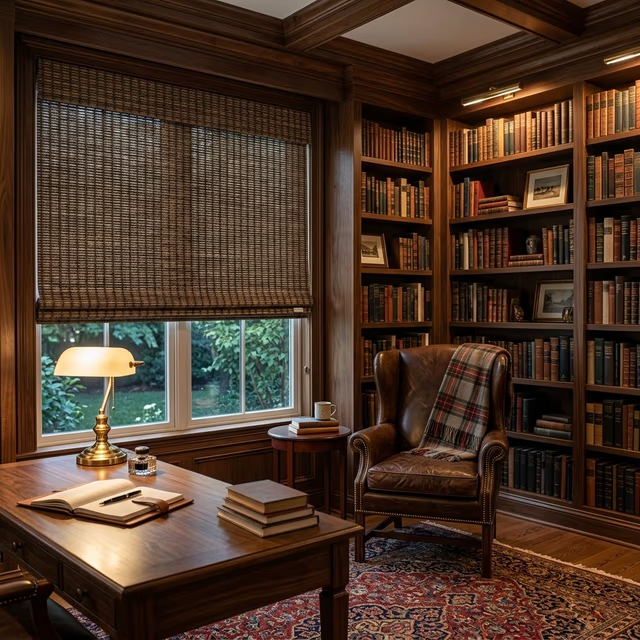
Hartmann and Forbes uses a Woven-to-Size (WTS) process that weaves each shade to exact window dimensions on the loom, eliminating the fabric waste inherent in conventional Trimmed-to-Size manufacturing. The WTS process achieves seamless widths up to 180 inches (15 feet) in a single panel, making it the preferred specification for floor-to-ceiling architectural glass walls in Mill Valley and Lucas Valley estates where oversized openings demand continuous fabric without visible seams. All materials meet California CDPH Standard Method v1.2 for VOC emissions and carry GreenGuard Gold certification.
Because every shade is handwoven to order, the standard lead time is 6 to 8 weeks from the date of order, covering material selection, weaving, edge binding, quality inspection, and shipping. Bay Blinds coordinates directly with the Hartmann and Forbes production team to track your order and schedule white-glove installation as soon as the shades arrive. Recent work includes a 6,800 sq ft Olson Kundig-designed estate with custom jute Roman shades and hand-tied sisal edge binding across 22 windows, integrated with the property’s RadioRA 3 smart home system. We serve Marin County and Petaluma’s River District alike.
//Related Products & Solutions
//Frequently Asked Questions
Are Hartmann and Forbes shades sustainable?
Yes. Hartmann and Forbes sources all natural fibers from sustainably managed farms and forests. Their jute, bamboo, sea grass, and abaca are harvested using methods that allow regrowth without depleting the source ecosystem. Every shade is finished with low-VOC stains and adhesives, and the company maintains transparent supply chain documentation for architects and designers who require sustainability certifications. For Marin County homeowners building or renovating to green standards, Hartmann and Forbes products align with LEED and Living Building Challenge material guidelines.
How long does a Hartmann and Forbes order take in Marin County?
Hartmann and Forbes shades are handwoven to order at their Portland, Oregon, workshop, with a standard lead time of 6 to 8 weeks from the date of order. Because every shade is crafted individually rather than pulled from warehouse stock, this timeline accounts for material selection, weaving, edge binding, quality inspection, and shipping. Bay Blinds coordinates directly with the Hartmann and Forbes production team to track your order and schedule installation as soon as the shades arrive.
Can natural fiber shades be motorized in my Marin County home?
Yes. Hartmann and Forbes natural fiber shades are fully compatible with motorized lift systems from both and Somfy. Motorization is especially practical for oversized shades, high-mounted windows, and whole-home automation setups where manual operation is impractical. Bay Blinds integrates Hartmann and Forbes shades with RadioRA 3, Caseta, and HomeWorks systems, as well as Somfy motors, giving you control through smartphone apps, wall keypads, voice assistants, and scheduled scenes.
What is the difference between Hartmann and Forbes and Hunter Douglas woven woods?
The primary difference is construction method. Hartmann and Forbes shades are hand-tied using artisanal weaving techniques at their Portland, Oregon, workshop, resulting in unique texture and character in every panel. Hunter Douglas Provenance woven wood shades are machine-woven at scale, which delivers consistency and a lower price point but lacks the handcrafted detail. Hartmann and Forbes also offers significantly more customization in weave pattern, edge binding, and colorway, making them the preferred choice for architects and interior designers working on $5M-plus estates where bespoke finishing is expected.
Experience Hartmann and Forbes in your home
Free in-home & on-site consultations across Marin County and Petaluma.