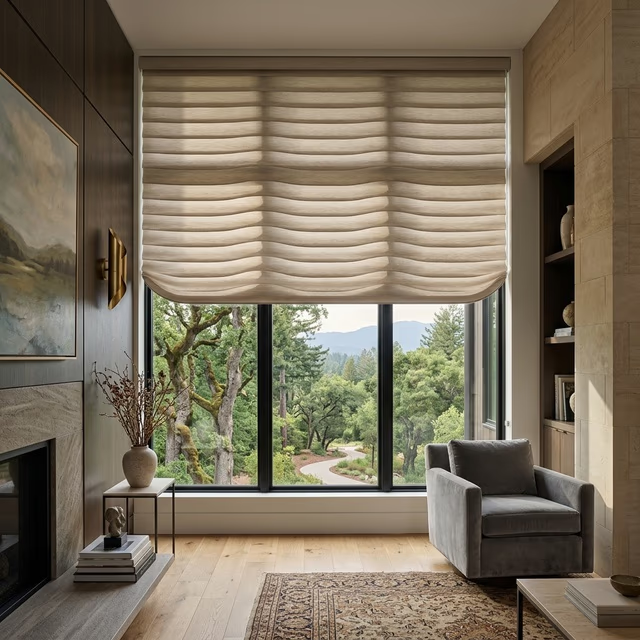
//Sonnette® Cellular Roller Shades
Cellular Roller Shades for Marin County Homes
Hunter Douglas Sonnette® shades wrap honeycomb cells around a roller tube - insulation with the clean profile of a roller shade, measured, designed, and installed across San Rafael and Marin County.
//The Hybrid
Roller simplicity, cellular insulation
Sonnette® wraps a honeycomb cellular fabric around a roller tube instead of pleating it, so the shade rolls up into a compact cassette headrail like a standard roller shade while its 2-inch cells trap insulating air pockets like a traditional cellular shade. The gently curved cell profile produces a radial light diffusion effect that scatters incoming sunlight evenly across the room rather than in harsh bands.
This resolves a common tradeoff: roller shades look clean but insulate little, while cellular shades insulate well but pleat-stack into a bulkier profile at the headrail. Available in semi-opaque and room-darkening fabrics with PowerView Gen 3 motorization, Sonnette is a compelling energy-efficiency upgrade for Marin homes.
//Sonnette vs. Duette
The best of both worlds
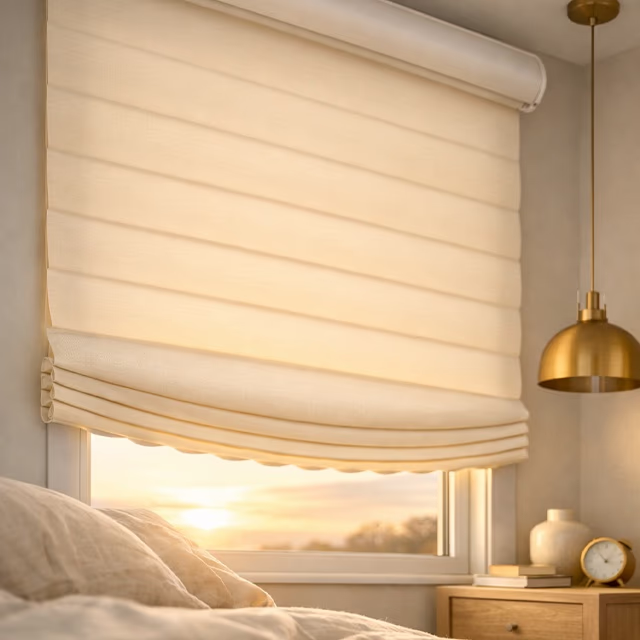
If you are choosing between Sonnette and a traditional Duette Honeycomb Shade, it comes down to priorities. Duette offers single-cell and double-cell (Architella) configurations with R-values up to 7.0 and blackout with LightLock side channels - the superior choice when maximum thermal performance is the goal.
Sonnette instead prioritizes aesthetics and simplicity: the rolling mechanism creates a smaller, cleaner headrail and eliminates the pleated fabric stack, and the curved cell design gives a distinctive, softer look for contemporary and transitional interiors. Many Marin County clients install Duette shades in bedrooms for maximum insulation and Sonnette in living areas for the cleaner roller aesthetic.
//Design Features
Kickback ventilation and front-rolling fabric
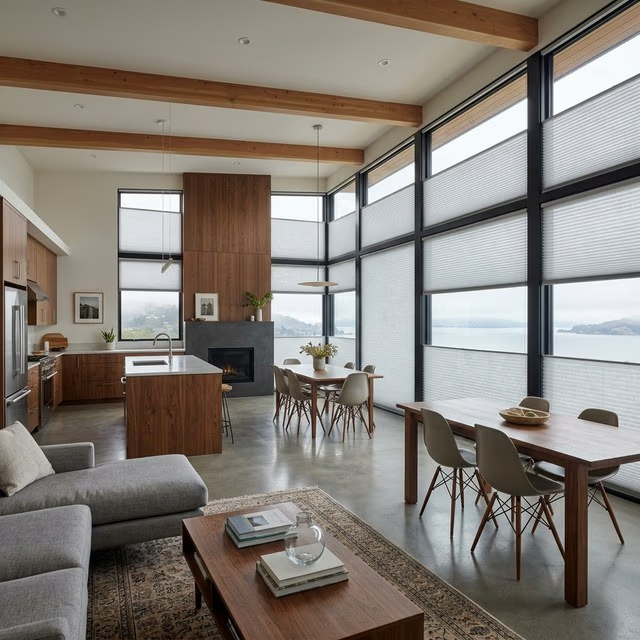
Two features set Sonnette apart. The kickback bottom rail angles the shade away from the window at the sill, creating an opening that lets fresh air flow through an open window while the shade stays lowered for privacy and light control - practical for Marin County homes where windows open during cooler mornings and evenings.
The front-rolling fabric option positions the cellular fabric on the room-facing side of the tube for a slightly fuller, more rounded profile, while standard rear-rolling sits tighter to the glass. Both configurations pair with PowerView motorization and meet the ANSI/WCMA A100.1-2022 child safety standard in cordless and motorized operating systems.
//Operation & Automation
Cordless, or fully automated
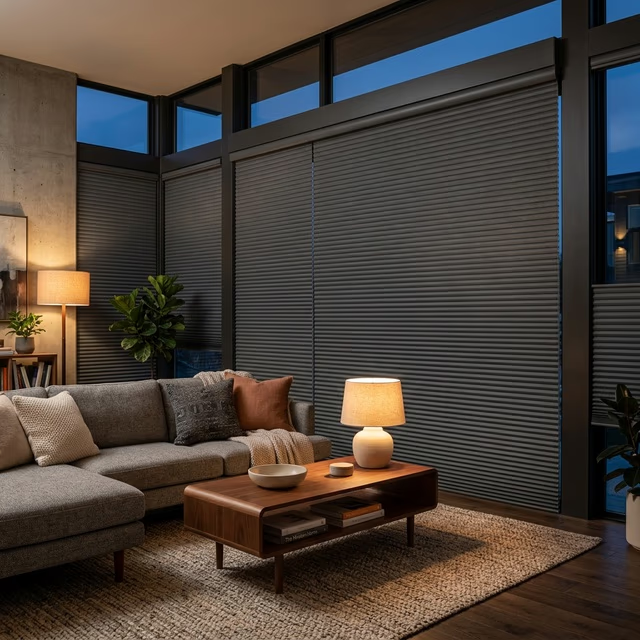
Sonnette shades run on Hunter Douglas PowerView Gen 3 motorization, LiteRise cordless lift, SoftTouch motorized operation, or a standard cord loop. PowerView controls your shades from a smartphone app, sets schedules by time of day or sunrise and sunset, and integrates with Alexa, Google Assistant, and Apple HomeKit.
Bay Blinds installs both battery-powered and hardwired PowerView systems for Sonnette shades throughout San Rafael, Mill Valley, and Novato. Every installation is custom-measured and fitted, with fabric samples brought to your home so you can evaluate the curved cell texture and opacity in your own light.
//Related Products & Solutions
//Frequently Asked Questions
How are Sonnette shades different from standard cellular shades?
Sonnette Cellular Roller Shades combine the clean, rolling operation of a roller shade with the insulating honeycomb cell structure of a traditional cellular shade. Standard cellular shades pleat and stack at the top of the window when raised, while Sonnette shades roll around a tube inside a compact cassette headrail, creating a sleeker profile. The 2-inch cells are also gently curved rather than flat, producing a soft, rounded-sm aesthetic that differs from the crisp pleats of a standard Duette honeycomb shade. This hybrid design gives you the thermal benefits of trapped-air insulation with the operational simplicity of a roller shade.
Do Sonnette shades provide good insulation for Marin County homes?
Yes. Sonnette shades use a true cellular honeycomb construction with 2-inch cells that trap air between the window glass and your interior, creating a thermal barrier that reduces heat transfer. While their R-value is lower than a triple-cell Duette Architella, Sonnette shades still outperform standard roller shades and blinds in energy efficiency. For Marin County homes that experience hot, dry summers and cool winters, Sonnette shades reduce solar heat gain in July and August and help retain interior warmth from November through March, contributing to lower PG&E costs year-round.
What is the Sonnette kickback feature?
The kickback feature on Sonnette Cellular Roller Shades allows the bottom of the shade to angle away from the window glass at the sill, creating an open gap that lets fresh air circulate when the window is open. Instead of the shade hanging flat against the glass, the bottom rail kicks outward, so the shade does not interfere with ventilation. This is especially useful in Marin County homes where homeowners open windows during cooler morning and evening hours while keeping the shade down for privacy and light control.
Can Sonnette shades be motorized in my Marin County home?
Yes. Sonnette Cellular Roller Shades are compatible with Hunter Douglas PowerView Gen 3 motorization, LiteRise cordless lift, SoftTouch motorized operation, and cord loop systems. PowerView allows you to control your shades from a smartphone app, set automated schedules based on time of day or sunrise and sunset, and integrate with voice assistants including Alexa, Google Assistant, and Apple HomeKit. Bay Blinds installs both battery-powered and hardwired PowerView systems for Sonnette shades throughout San Rafael, Mill Valley, and Marin County.
See Sonnette shades in your home
Free in-home & on-site consultations across Marin County and Petaluma.