//Shop by Window
Bay, Bow and Corner Window Treatments in Marin County
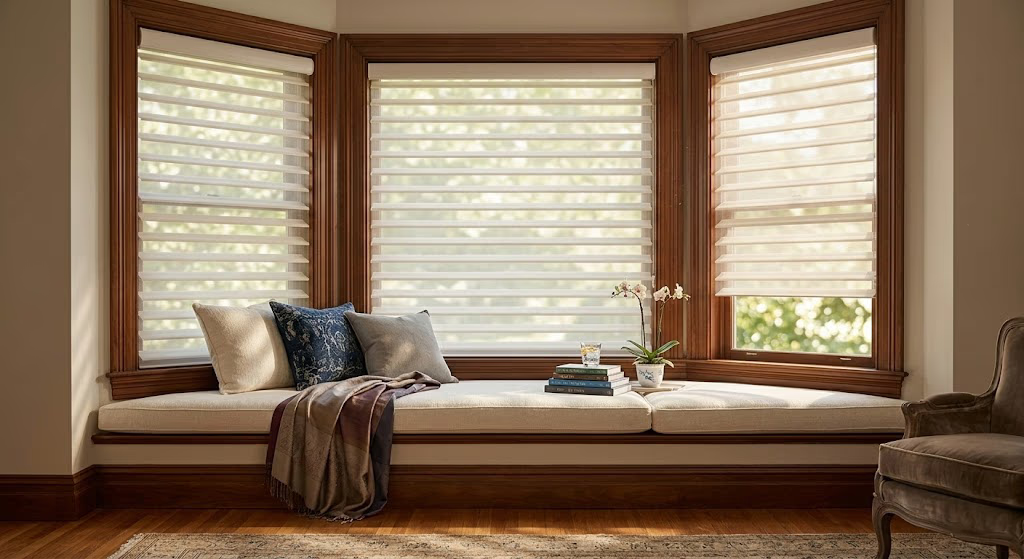
Bay and bow windows require precise angle coordination across three to five panes. Bay Blinds custom-measures each section and mounts shade tracks or shutter frames at the exact mullion angles for seamless coverage with no light leaks across Marin County and Petaluma.
//Precision Measurement
How Do You Measure Bay Windows for a Perfect Fit?
Bay window measurement requires documenting each pane individually plus the exact mullion angles between them using a digital angle finder. Standard 135-degree angles are common, but custom-built and older homes across Novato and San Rafael often vary due to settling or original construction tolerances.
The measurement process starts with each pane’s width, height, and frame depth, then records the angle between every adjacent section. This data determines whether each pane receives an inside-mount or outside-mount treatment, how headrail tracks align across the angles, and where return pieces terminate at the wall. For plantation shutters, the frame profiles must be custom-cut to match the measured angles so the panels meet cleanly at each mullion. For cellular shades and Roman shades, custom angle adapters connect the headrails between panes to create a continuous line across the entire bay. Our design team performs this precision measurement during every bay window consultation at no charge.
//Coordinated Design
How Do You Coordinate Individual Shades Across Multiple Panes?
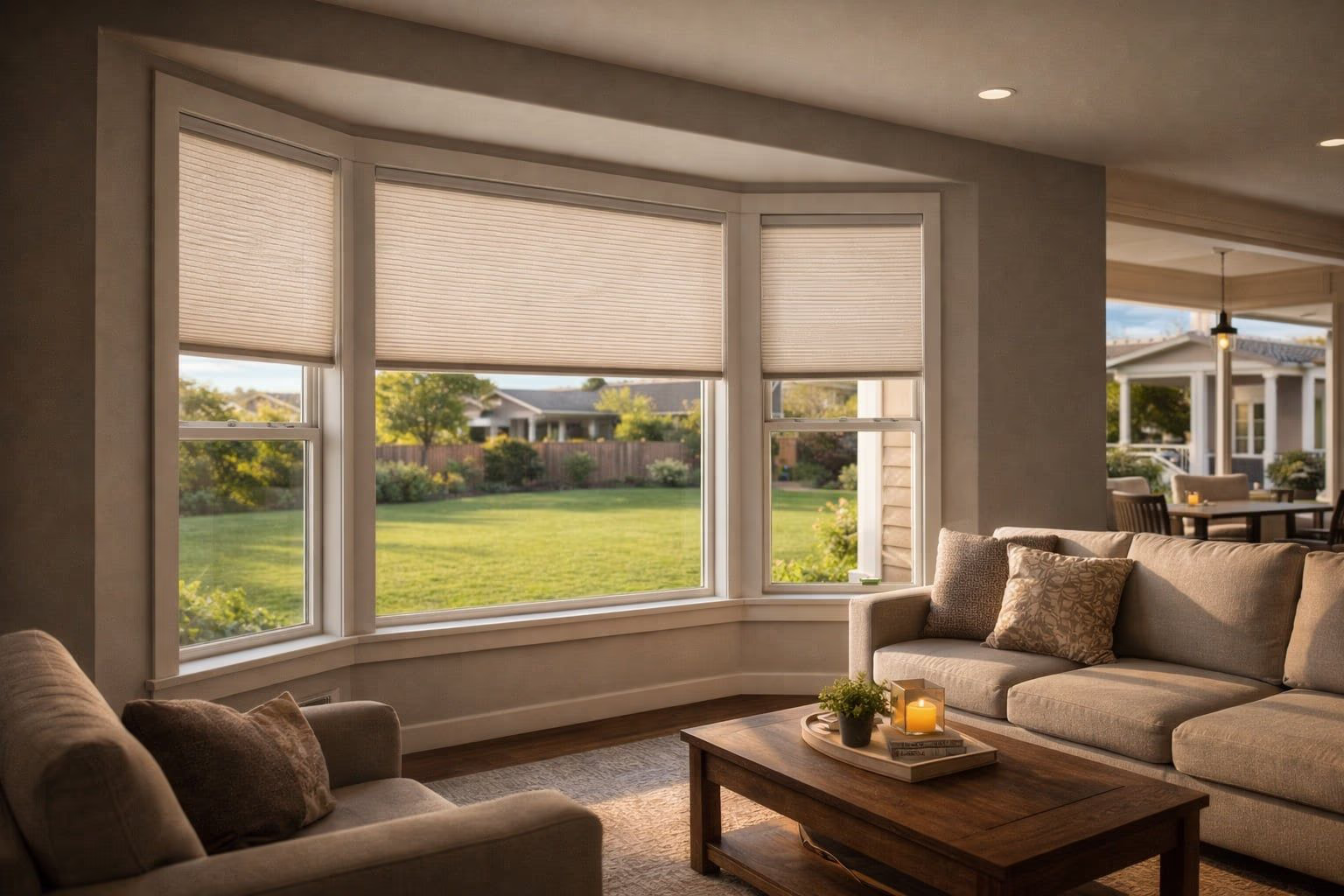
Every pane in a bay or bow window receives treatments from a single fabric dye lot with identical style, opacity, and operating mechanisms, then joined with custom angle adapters that create a continuous headrail line and eliminate light gaps at mullion junctions.
Color consistency is the first requirement. Even minor shade variations between panes are immediately visible when the treatments hang side by side in a bay window. Bay Blinds specifies all sections from the same fabric roll to ensure an exact match. The second requirement is alignment - every shade must hang at the same height, with the same tension, and the same bottom rail position across all panes. The third requirement is junction management: where two headrails meet at an angle, a custom connector bridges the gap so no light leaks through. When this coordination is done correctly, the bay window treatment looks like a single continuous installation rather than a collection of individual shades. Compare cellular honeycomb shades, Vignette Modern Roman shades, and custom drapery during your consultation to find the coordinated look that fits your room.
//Corner & Bow Geometry
Corner Window Treatments and Return Angles
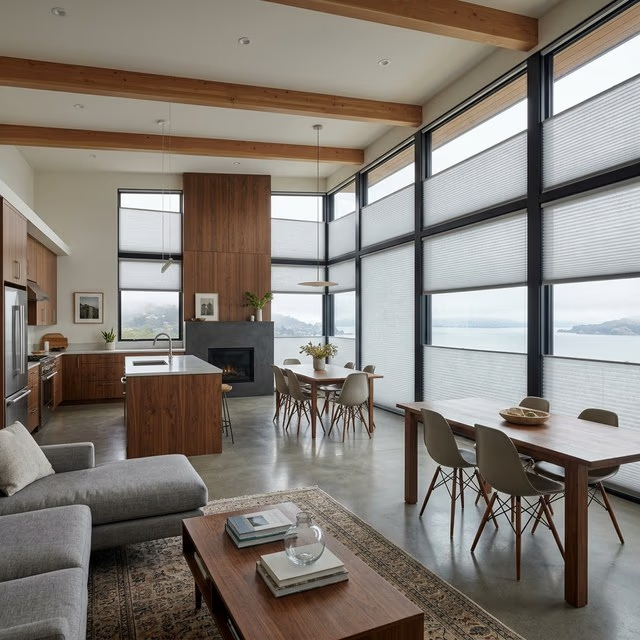
Bay, bow, and corner windows are among the most challenging window types to treat correctly. Each pane sits at a different angle to the next, creating junctions where standard flat-track headrails leave gaps. Corner windows meet at 90 degrees while bow windows curve gently toward 180, so the treatment must bend with the glass rather than fight it. The window projects away from the wall plane, requiring return pieces that bridge the transition.
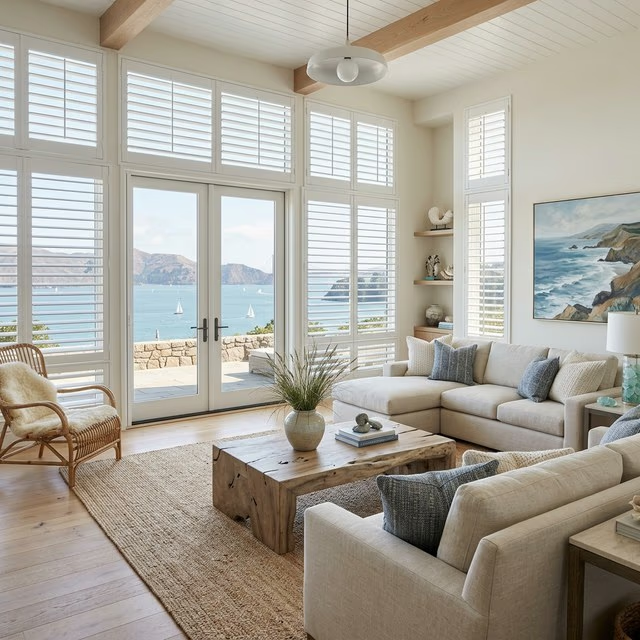
Return angles are the short side pieces where a bay window treatment transitions from the angled bay section back to the flat wall plane on either side. Without proper returns, the treatment ends abruptly at the last pane, leaving a visible gap that leaks light and drafts. Bay Blinds fabricates custom return pieces that match the treatment material and attach flush to the wall, closing the light gap and creating a polished, built-in frame around the entire bay. For homes with sharply pitched or curved glass, our angled and arched window solutions apply the same custom-frame approach, and plantation shutters with custom hinged panels are a popular choice for corner and bow configurations. Browse the full range of window types we treat to see how each geometry is handled.
//Seat & View
Window Seats, Sightlines, and Everyday Operation
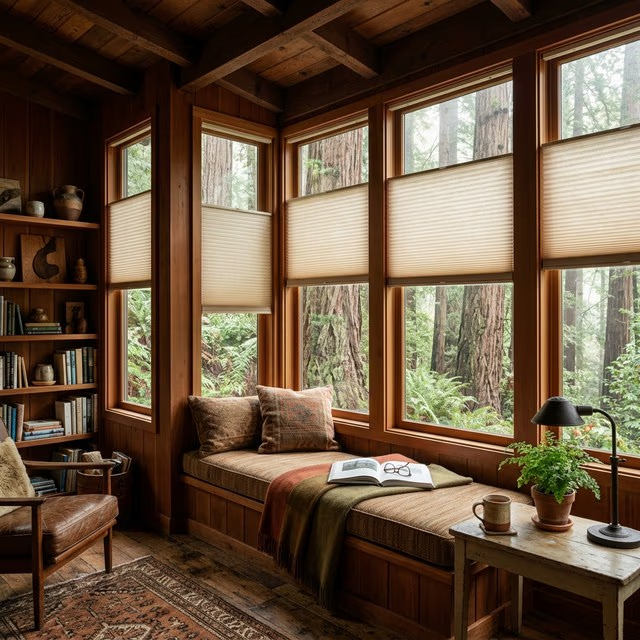
Bay windows are often built over a window seat or reading nook, and the treatment has to keep that space usable. Inside-mount shades sit flush within each pane so cushions and sills stay clear, while the continuous headrail preserves the uninterrupted sightline that makes a bay worth having. Cordless and top-down/bottom-up options let you drop the upper portion for light while keeping the seat below private - ideal for a living room bay or a bedroom reading corner.
Manually operating three to five shades every morning and evening is tedious and often results in uneven coverage as family members skip panes or leave shades at different heights. PowerView motorization solves this by grouping all bay window motors into a single zone that operates as one unit. Schedule the bay to close at 2 PM during summer to block peak heat, open at sunrise for morning light, and close at sunset for privacy - all automatically. Bay Blinds handles motor selection, app configuration, and smart home integration with Apple HomeKit, Amazon Alexa, and Google Assistant during installation.
//Energy Performance
Why Are Bay Windows Energy Efficiency Priorities for Large Glass?
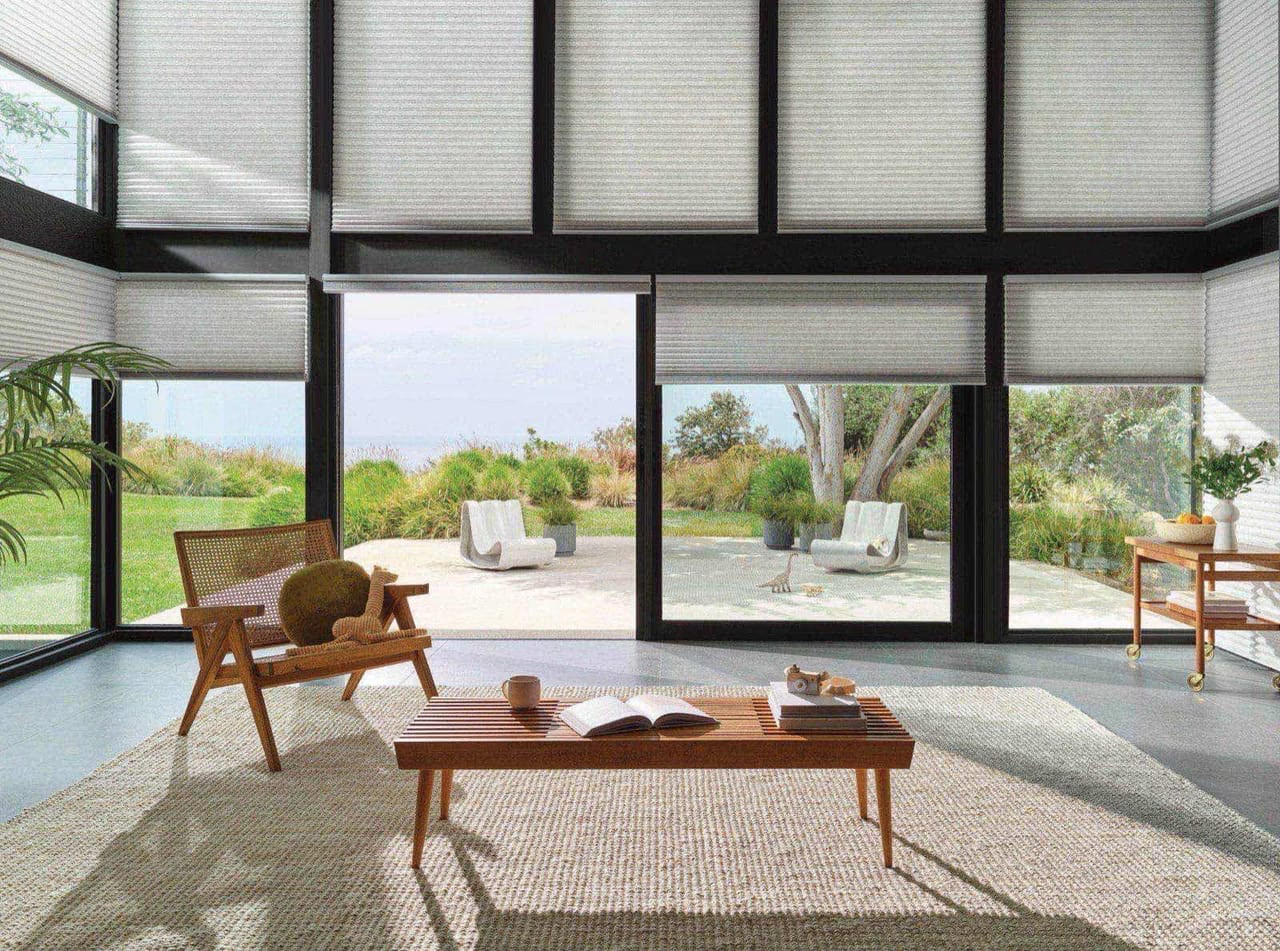
Bay windows concentrate three to five glass surfaces in a compact area that projects beyond the building envelope, creating a thermal weak point that loses significantly more energy than standard flat windows. Properly insulated bay window treatments with R-values up to 7.0 can substantially reduce this heat loss.
The projecting geometry of bay windows exposes glass on three sides to outdoor temperature extremes, and the junction between the bay structure and the main wall is often a site of air infiltration. In Marin County’s Richardson Bay Valley climate - where summer highs exceed 100°F and winter lows reach the low 30s - bay windows without proper treatments are responsible for disproportionate energy loss. Triple-cell Duette Architella honeycomb shades with R-7.0 insulation create a thermal moat at each pane, and the custom return pieces close the thermal gap where the bay meets the wall. Proper insulation is critical, and for homes pursuing 2026 Title 24 compliance with U-factor ≤ 0.27, properly insulated bay windows are essential to meeting the code threshold. As an authorized Hunter Douglas dealer, Bay Blinds serves homeowners across Novato, San Rafael, and Petaluma.
//Related Products & Solutions
//Frequently Asked Questions
How do you measure bay windows for a perfect fit in my Marin County home?
Bay window measurement requires documenting each pane individually plus the angles between them. Our design team measures the width, height, and depth of every pane, then uses a digital angle finder to record the exact mullion angles between adjacent sections - typically 135 degrees for standard bay windows, but often varying in custom-built and older homes where settling has shifted the original geometry. These measurements determine whether each pane receives an inside-mount or outside-mount treatment, how the headrail tracks align across the angles, and where the return pieces terminate at the wall. This precision measurement process is included at no charge with every Bay Blinds consultation and takes approximately 20–30 minutes per bay window.
Can you coordinate matching treatments across all bay window panes?
Yes. Bay Blinds specifies treatments from a single fabric dye lot across all panes of a bay or bow window to ensure perfect color consistency. The shade or blind style, opacity, and operating mechanism are identical across every section, creating a unified appearance when viewed from inside or outside. For plantation shutters, all panels are fabricated from the same wood batch with matching louver sizes, frame profiles, and paint or stain finishes. The key challenge is aligning the treatments at the mullion angles so the headrails create a continuous line and the fabrics hang at a consistent height and tension. Our team specifies custom headrail connectors and angle adapters that bridge each junction cleanly.
What are return angles and why do they matter for bay windows?
Return angles are the short side pieces where a bay window treatment transitions from the angled bay section back to the flat wall plane on either side. Without proper returns, the treatment ends abruptly at the last bay pane, leaving a visible gap between the shade and the wall that leaks light and drafts. Returns also create a finished, built-in appearance that makes the bay window treatment look architectural rather than aftermarket. Bay Blinds fabricates custom return pieces that match the treatment material and attach flush to the wall, closing the light gap and creating a polished frame around the entire bay. The return angle is measured during consultation and fabricated to match the specific wall-to-bay transition in your home.
Are motorized shades available for bay window configurations?
Yes. PowerView Gen 3 motorization works across all panes of a bay or bow window with synchronized operation that opens and closes every section simultaneously. Each pane receives its own motor, and the motors are grouped in the PowerView app so a single tap or voice command operates the entire bay as one unit. Scheduling is also synchronized - program the bay window to close during peak afternoon heat for energy savings and open at sunrise for morning light. For homes with multiple bay windows, each bay can be assigned to a room scene that coordinates with other window treatments throughout the home. Bay Blinds handles all motor installation, app programming, and smart home integration.
Precision-Fitted Bay Window Treatments
Free in-home & on-site consultations across Marin County and Petaluma. Our designer measures every pane and records every angle.