//Wellness Solutions
Circadian Wellness Window Treatments for Marin County
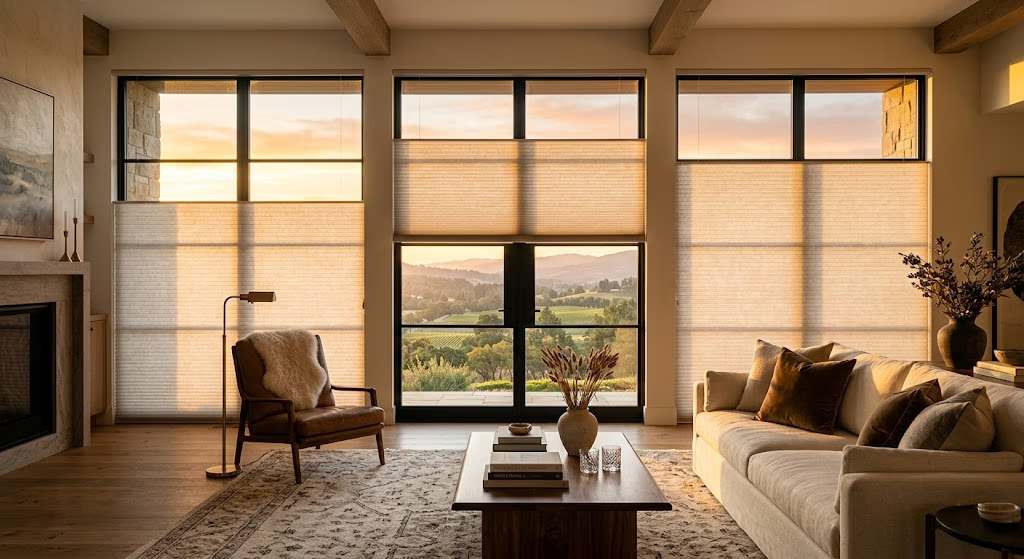
Automated shade schedules regulate natural light throughout the day to support healthy sleep-wake cycles and daytime alertness - PowerView sunrise and sunset scenes designed and installed across Marin County.
//The Science
The science of circadian lighting for better sleep
Your body runs on an internal clock governed by a region of the brain called the suprachiasmatic nucleus, and that clock relies on light as its primary timing signal. Bright morning light triggers cortisol production and suppresses melatonin, telling your body it is time to be alert; as light fades in the evening, melatonin rises and signals the transition to sleep. Research shows properly timed light exposure governs roughly 80% of the body’s circadian signaling, directly influencing melatonin onset and sleep quality. When that cycle is disrupted by artificial light at night or blackout conditions in the morning, the consequences reach well beyond poor sleep - impaired immune function, mood instability, and reduced cognitive performance.
Automated window treatments make light itself the therapy. By programming shades to block light in the evening and gradually open at dawn, you align indoor light exposure with your natural rhythm without lifting a finger. For Mill Valley and San Rafael residents whose days are spent among hillsides and open landscapes, indoor light should reinforce - not contradict - the outdoor patterns their lifestyle already supports. Bay Blinds pairs the right room-darkening shades with automation so the light entering your home tracks the natural arc of the sun.
//Scene Programming
Automated sunrise and sunset scenes with PowerView
PowerView® Gen 3 calculates astronomical sunrise and sunset times from your home’s GPS coordinates. For a Mill Valley residence at 38.6105° N latitude, the system automatically adjusts for seasonal shifts - from early June sunrises before 6:00 AM to late December dawns after 7:15 AM - without any manual reprogramming. You set the behavior once and the schedule tracks the sun year-round. You can also add offsets, such as opening shades 15 minutes before sunrise or closing them 30 minutes before sunset, for precise circadian tuning.
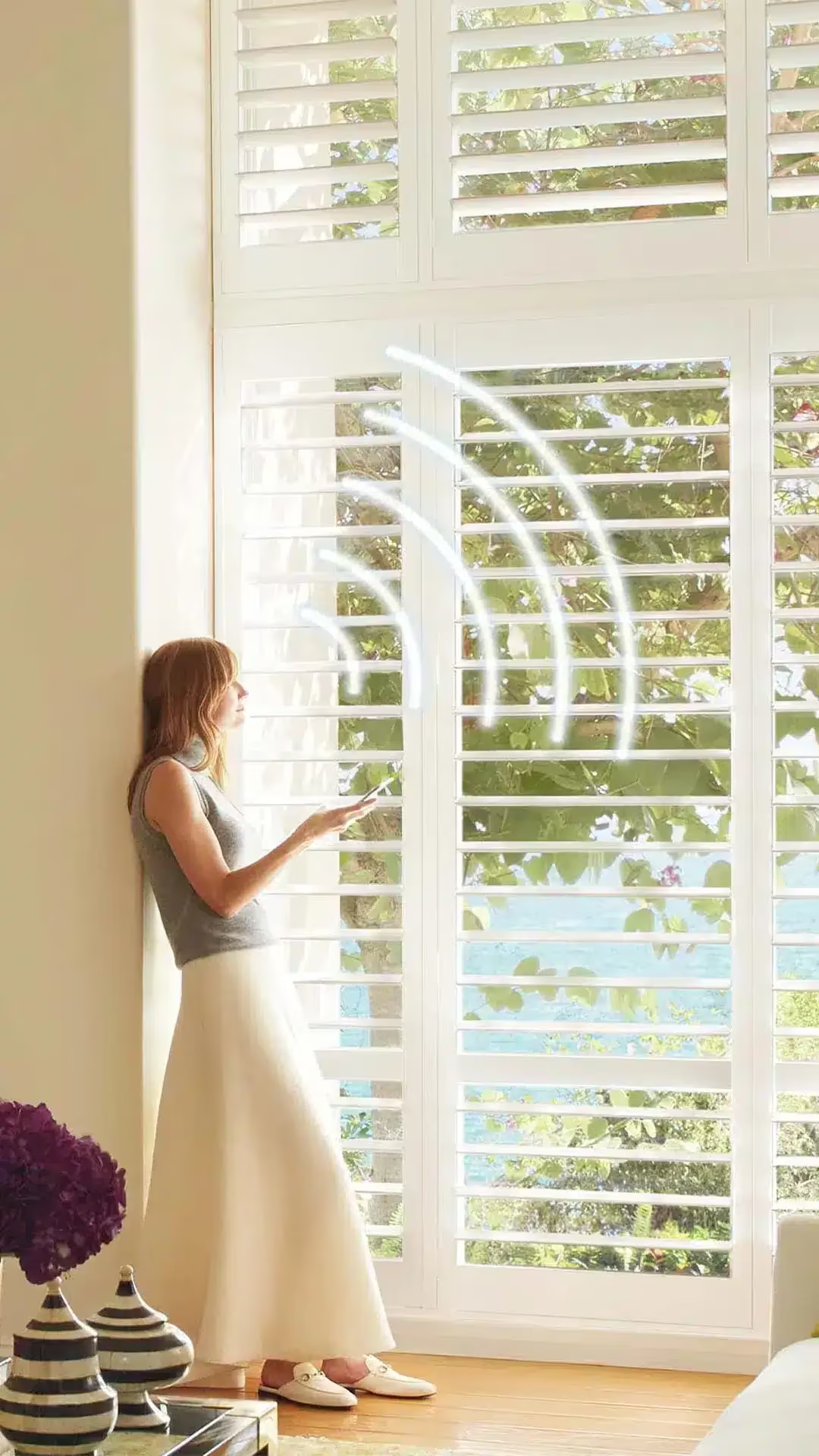
Morning wake scenes gradually open bedroom shades over a configurable interval - adjustable from 30 seconds to five minutes - letting soft daylight replace an alarm clock’s jarring tone. During the afternoon, shades reposition to manage solar glare on west-facing windows while preserving light in north-facing rooms; as evening approaches, wind-down scenes lower sheers or close opaque shades to reduce stimulating light before bed. PowerView supports up to 15 customizable scenes per home, each assignable to a single shade, a group, or every window at once, controllable hands-free through Apple HomeKit, Alexa, and Google Assistant.
//Room-by-Room Design
Room-by-room circadian programming
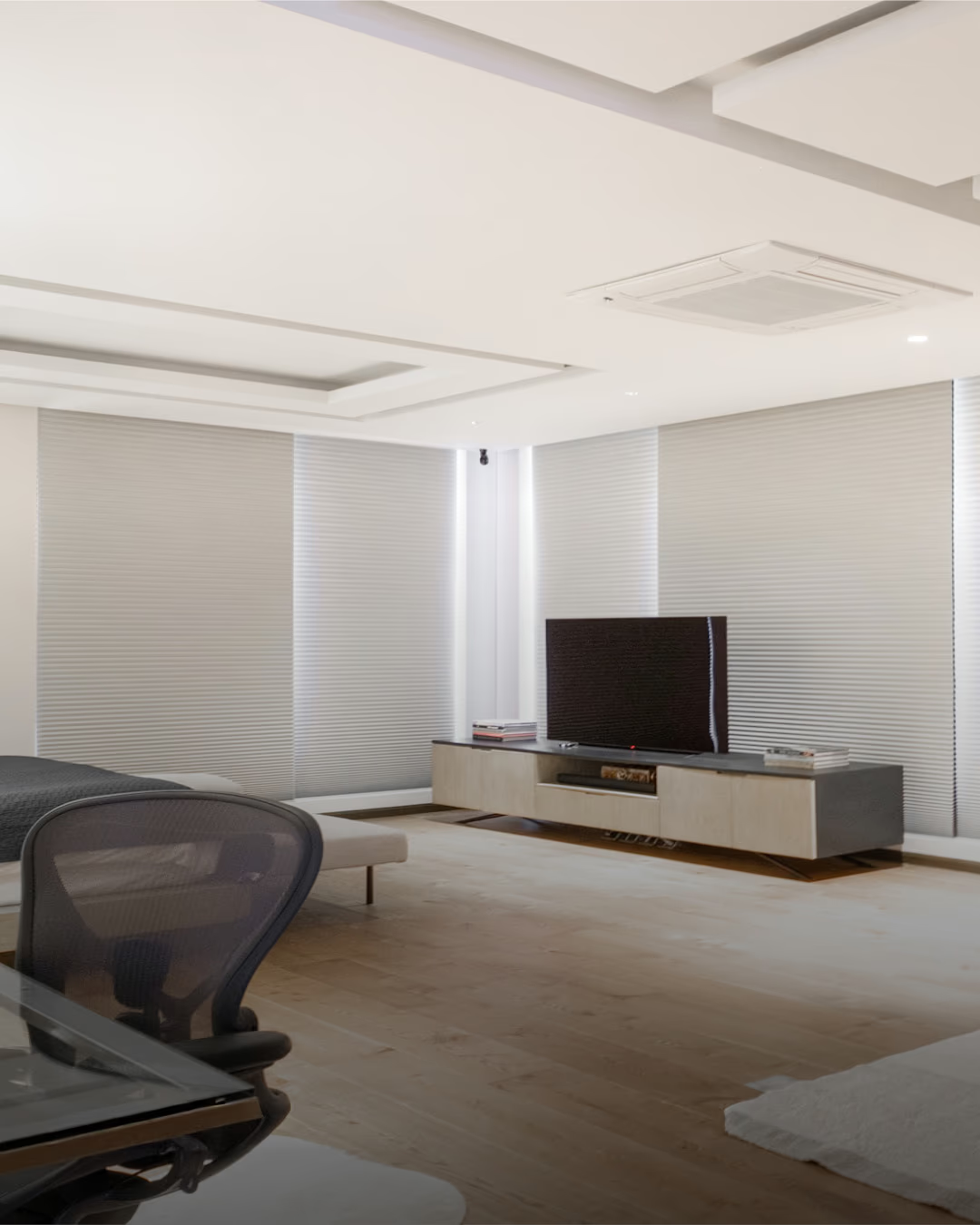
Every room has different light requirements, and a circadian system should reflect that. In the primary bedroom, we program blackout shades to hold position until 6:30 AM, then gradually open over three to five minutes to simulate a natural dawn; by 9:00 PM they return to full blackout to support uninterrupted melatonin production through the night. Bedrooms benefit most from Room Darkening or Blackout fabrics such as Duette® Architella honeycomb shades, which block 99% or more of incoming light for undisturbed sleep.
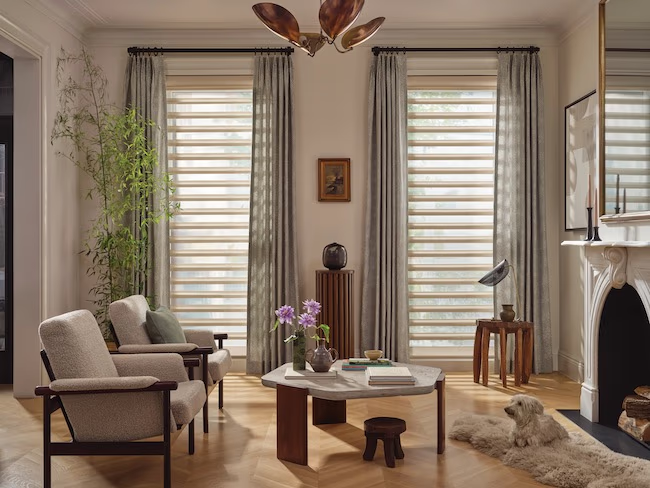
Home offices receive anti-glare positioning during work hours, particularly for south- and west-facing windows where screen glare peaks in the afternoon. Kitchen and great-room shades - often light-filtering Silhouette® shadings - are programmed to maximize natural light during morning meal preparation, then transition to softer filtered light as the day winds down. Nurseries get strict schedules that maintain near-total darkness during nap times and overnight, with tightly controlled transitions that avoid sudden brightness changes. Layering a sheer with a blackout on dual-roller hardware gives a single window the widest circadian range, and Lutron Palladiom motors run at just 35 dBA so they never disturb sleep.
//Whole-Home Integration
Ketra tunable lighting and whole-home wellness
Automated shades are one half of a comprehensive circadian strategy. Pairing motorized window treatments with Ketra tunable white lighting creates a unified system where natural and artificial light work together. Ketra provides full-spectrum tunable white light from 1400K to 10000K - the widest range available in any architectural lighting platform. As morning shades open to admit daylight, Ketra fixtures shift from warm amber tones to energizing 5000K+ daylight-equivalent output; in the evening the reverse occurs, with shades closing while Ketra dims to deep amber below 2000K to support melatonin production.
For interior rooms, basements, or north-facing spaces with limited sunlight, the Aura® Illuminated Shades integrate LED backlighting directly into the shade fabric, creating the appearance of natural daylight at any hour. For homes running Savant or Control4, we synchronize shade scenes with your existing ecosystem so one command adjusts both window treatments and lighting at once. As an authorized Hunter Douglas dealer, Bay Blinds also partners with wellness-focused architects and designers from Novato to Petaluma, integrating biological lighting from the design phase rather than as an afterthought.
//In the Field
A Mill Valley family wellness home
We programmed a comprehensive circadian shade system for a family of four in a Mill Valley estate. The parents reported chronic sleep disruption from early-morning light flooding through east-facing hillside windows. We installed Duette® Architella blackout shades with PowerView® Gen 3 in the primary suite, programmed to remain closed until 6:45 AM then gradually open over three minutes to simulate natural dawn. The nursery received separate scheduling with Room Darkening fabric that blocks 99% of light during nap times, and evening scenes across the great room automatically lower sheers at sunset minus 30 minutes.
The family reported improved sleep onset within the first week - the result most clients see once light exposure is aligned to their rhythm. Circadian systems complement our broader wellness work, including UV and art-preservation shading and energy-efficiency strategies. Bay Blinds designs and installs these systems throughout Marin County, from measurement to programming to hands-on tuning of every scene.
//Related Products & Solutions
//Frequently Asked Questions
Can automated shades really improve sleep quality?
Yes. Automated shades regulate the timing and intensity of natural light entering your bedroom, which directly influences your body’s melatonin production. By programming shades to block light in the evening and gradually open in the morning, you align your light exposure with your circadian rhythm. Clients consistently report faster sleep onset and more restful nights within the first week of using programmed sunrise and sunset scenes.
How do sunrise shade schedules work?
PowerView Gen 3 uses your home’s GPS coordinates to calculate exact sunrise and sunset times for your location every day of the year. In Mill Valley (38.6105° N), for example, summer sunrise shifts from roughly 5:50 AM in June to 7:20 AM in December. Your shades adjust automatically to these shifting times without any manual reprogramming. You can also add offsets - such as opening shades 15 minutes before sunrise or closing them 30 minutes before sunset - for precise circadian tuning.
What shade fabrics work best for circadian control?
Bedrooms benefit most from Room Darkening or Blackout fabrics such as Duette® Architella, which block 99% or more of incoming light for undisturbed sleep. Living areas and kitchens work well with Sheer or Light Filtering fabrics like Silhouette®, which allow natural daylight to stimulate alertness during the day while reducing glare. A layered approach - pairing a sheer with a blackout on dual-roller hardware - gives you the most flexibility for circadian programming in a single window.
Can I combine shade automation with smart lighting in my Marin County home?
Yes. Lutron’s ecosystem - specifically Ketra tunable white lighting - allows you to coordinate motorized shades with full-spectrum tunable lighting on a single platform. Ketra fixtures adjust from 1400K to 10000K, providing the widest color-temperature range available for true circadian lighting. As your shades open to allow morning light, Ketra fixtures can simultaneously shift from warm amber tones to cooler 5000K+ daylight-equivalent output. Savant and Control4 integrations also support synchronized scenes that adjust both window treatments and Ketra lighting together, giving you comprehensive circadian management throughout your home.
Transform your sleep with circadian shading
Free in-home & on-site consultations with live PowerView demonstrations across Marin County and Petaluma.